



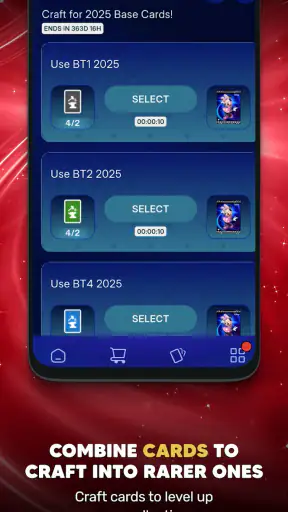
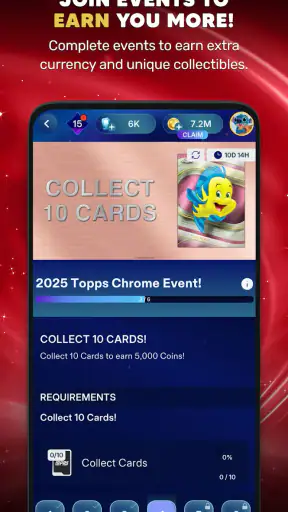
I approached Disney Collect! as a casual collector rather than as someone trying to complete a set as quickly as possible. That distinction matters. This free entertainment app from The Topps Company, Inc. is built around collecting and trading Disney character cards, so its appeal comes less from a conventional beginning-to-end game campaign and more from the small routine of opening, organizing, comparing, and exchanging digital items.
My first impression was that it suits people who already enjoy Disney characters and the feeling of building a collection over time. The app is rated for Everyone, and its broad audience is reflected in its reach: it has passed one million installs and holds an average rating of 3.5 from roughly twelve thousand ratings. Those figures suggest a sizeable community, but they also hint at a mixed experience rather than universal approval. I found it easy to understand, although the long-term enjoyment depends heavily on whether collecting and trading feel rewarding to you.
From a spare moment to a growing Disney collection
The most natural starting condition is a short break in the day. I would open the app with no complicated objective, browse the available collection activity, and decide whether I wanted to look for something new or work on what I already had. That makes it different from a story-driven Disney game: there is no need to remember a plot, learn a large control scheme, or reserve a long uninterrupted session.
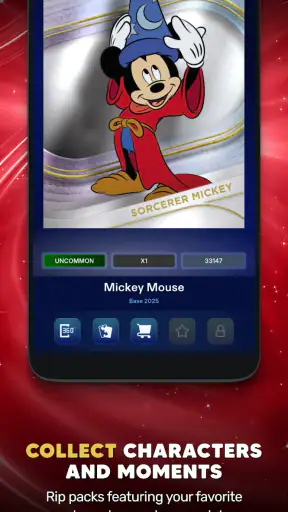
The central idea is simple, but the decision-making becomes more interesting once you stop treating every card as equally valuable to your personal collection. A character you already have may be less useful to you than a missing card, while another collector may be looking for exactly that duplicate. The real task is therefore not merely acquiring items. It is deciding what belongs in your own collection, what can be offered to another person, and what is worth holding back for a better exchange.
I like this structure because it gives the app a social layer without requiring a competitive action-game mindset. You can enjoy the Disney theme at your own pace, then use trading to turn unwanted duplicates into progress. That workflow is the strongest reason to try it. If you only want to watch Disney clips, play a character-based platform game, or follow a structured adventure, a streaming service or a traditional game will probably feel more satisfying.
How the everyday collection loop works
My practical workflow begins with checking what I already own before chasing anything new. That small habit prevents the collection from becoming a confusing pile of repeated items. I would mentally divide the collection into three groups: cards I definitely want to keep, duplicates that might help another collector, and items whose value depends on whether they complete a set or match a current goal.
After that, I would move through the available collecting activity and inspect the outcome rather than tapping through it automatically. The useful question is not simply, “Did I get something?” It is, “Does this improve my collection, create a trade opportunity, or add another duplicate?” That change in perspective makes the app feel more deliberate and reduces the disappointment of receiving something familiar.
The next step is reviewing possible trades. I would avoid offering a card immediately just because it is duplicated. A duplicate can become useful later if it is the missing piece in someone else’s collection, and a rushed exchange may leave you wishing you had kept it. A better routine is to wait until you understand what you need and what you can reasonably give away.
Finally, I would return to the collection view and check the result. Did the exchange fill a gap? Did it move me closer to a themed group? Did it simply replace one duplicate with another? This closing step is important because it turns random acquisition into a repeatable personal system. Without it, the app can feel like opening digital packs with no clear outcome.
A realistic use case: a short evening check-in
Imagine finishing dinner with ten minutes before another task. This app can fit that moment well. I would open it, review recent additions, separate duplicates, and look through trade possibilities. If there is no appealing exchange, I can close it without losing the thread of a larger story. When I return later, the collection itself provides the reminder of what I was working toward.
That same scenario also shows the main limitation. A short session may be pleasant, but it may not feel substantial every time. If the available activity does not produce something meaningful for your collection, the visit can end with little sense of progress. This is a collector’s app, so patience is part of the design experience. People who need a clear reward at the end of every session may find the loop uneven.
Where trading changes the experience
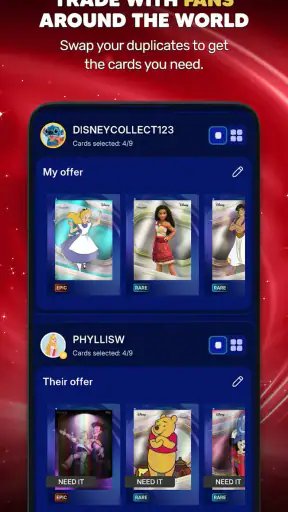
Trading is the point where the app becomes more than a private album. I would treat each exchange as a handoff between two collection plans. Before proposing anything, I would identify the exact reason for the trade: completing a character group, replacing a duplicate, or helping another person while receiving something useful in return.
That approach avoids a common mistake: assuming that a visually appealing card is automatically the best trading asset. Its practical value depends on context. A card that does nothing for my collection may be highly useful to another person, while a card that looks ordinary may be the one I need to finish a section. I found that this makes organization more important than it first appears.
For a smoother handoff, I would keep my collection tidy and review offers carefully instead of responding impulsively. I would also avoid treating every proposed exchange as an obligation. The app is entertainment, and declining a poor match is better than making a trade that removes one of the few items I genuinely wanted to keep.
This is one of the more specific strengths of the experience: it gives duplicates a second purpose. In many collection apps, repeated items simply feel like wasted outcomes. Here, they can become part of a social negotiation. The trade-off is that the value of the feature depends on finding exchanges that make sense. If the community activity around your collection is quiet or the available offers do not fit your goals, the social promise becomes less noticeable.
Organizing the collection before it becomes work
I recommend establishing a simple rule from the first session. Keep a mental “do not trade” group for favorites, a “possible trade” group for duplicates, and a “decision later” group for anything connected to a collection goal you have not settled yet. Even without turning the app into a spreadsheet project, this prevents the usual collector problem of forgetting why an item mattered.
Another useful habit is to choose one modest objective for a session. You might focus on a particular character family, look for missing pieces in one section, or simply prepare a few sensible trade candidates. A narrow objective makes random results easier to judge. It also protects the app from becoming a repetitive sequence of taps with no personal direction.
I would not recommend spending real money until the free loop has proved enjoyable on its own. The app is free to download, but it includes in-app purchases ranging from $0.99 to $99.99 per item. That is a wide range, and it makes personal limits especially important. If buying something feels like the only way to make a disappointing session worthwhile, I would stop and return later rather than purchase impulsively.
What the handoffs feel like in practice
There are several handoffs in the full workflow. The first is between the app and me: it presents collecting activity, while I decide what counts as progress. The second is between my current collection and my future plans: duplicates may be useless today but valuable when a goal changes. The third is between my collection and another user’s, where a trade only works if both sides understand what they are giving up and receiving.
Those handoffs create a more thoughtful experience than a purely solitary card-opening app, but they also introduce friction. I need to remember what I want, assess whether an exchange is fair for my own goals, and accept that another person’s priorities may not match mine. The app does not remove the work of collecting; it gives that work a Disney-themed place to happen.
I also found that the app is best approached with flexible expectations. A trade may not complete immediately, and a newly acquired card may not produce instant satisfaction. The result is closer to maintaining a hobby than clearing levels. That makes it a good fit for relaxed collectors and a weaker fit for anyone looking for constant action or a tightly controlled progression path.
What you get at the end of the workflow
The outcome is a personal digital collection shaped by your choices, your patience, and your exchanges. The strongest result is not one isolated acquisition. It is the gradual feeling that the collection reflects your own Disney preferences, with certain characters kept because they matter to you and others moved along because they helped someone else.
That sense of ownership is why I can recommend it to a Disney fan who enjoys cataloging, comparing, and trading. It is also why I would not describe it as a universal entertainment app. Someone who wants immediate rewards may see too much repetition. Someone who dislikes digital collecting may wonder why the process deserves attention when the cards have no physical presence.
Compared with a standard Disney-themed mobile game, this app offers less direct control and less traditional gameplay, but more room for personal collection decisions. Compared with a general trading-card app, its advantage is the focus on Disney characters and the familiarity of that universe. Compared with simply browsing character images online, it adds goals, ownership, and exchanges, although it also asks for more patience and attention.
Where the flow breaks down
The main break occurs when the acquisition stage does not connect to a meaningful personal goal. If I receive another duplicate and have no useful trade in sight, the session can feel stalled. The second break comes when the trading stage becomes more effort than enjoyment. Sorting, evaluating, and waiting for a suitable exchange are worthwhile only if I enjoy the collecting process itself.
There is also a financial boundary to keep in mind. Because optional purchases can reach $99.99 per item, I would not hand the app to a child without discussing spending rules and using the device’s normal purchase protections. The Everyone rating describes the content audience, not a promise that every household will want unrestricted buying access.
Performance expectations should also be realistic on older devices. The app supports Android versions from 7.1 onward, and the current version is 40.2.0, but an older compatible phone may not feel as comfortable as a newer one when browsing a visually rich collection. I would keep the app updated when possible and make sure the device has enough room for a smooth everyday experience.
The average rating of 3.5, based on about 12K ratings and 1.8K reviews, matches my balanced view: the concept is appealing, but the enjoyment is not automatic. Some people will love the Disney focus and trading routine, while others will quickly tire of duplicates, waiting, or the pressure to spend. The app has also been available since Nov 18, 2019, so it is better understood as an established collecting hobby than as a brand-new novelty.
Who should install it, and who should skip it
I would recommend it to Disney fans who enjoy digital albums, gradual progress, and the social satisfaction of exchanging items. It is particularly suitable for someone who likes checking a collection during short breaks and does not need every session to end with a major reward. Families may also find the theme approachable, provided adults set clear expectations around optional purchases.
I would skip it if my priority were a complete single-player game, a rich animated story, or fast action. I would also skip it if repeated items immediately feel frustrating, because duplicates are part of the basic collecting reality. A person who wants a physical card collection may prefer a real-world trading-card hobby, where ownership and exchange work differently and do not depend on an app-based routine.
My advice is to begin slowly: explore the free experience, choose a collection goal, and do not spend simply to overcome an uninteresting result. Keep favorites separate from trade candidates, and judge progress by whether your collection becomes more personal rather than merely larger. The best way to enjoy this app is to treat it as a patient Disney collecting hobby, not as a race to acquire everything.
After using it in that way, I see Disney Collect! as a pleasant but specialized entertainment app. Its free entry, Everyone rating, and familiar Disney theme make it easy to try, while the trading workflow gives duplicates a purpose and creates a reason to return. The friction is real: progress can feel uneven, exchanges require judgment, and optional purchases demand restraint. For the right collector, though, those decisions are the experience rather than an obstacle.
If you already enjoy Disney characters and the quiet satisfaction of organizing a collection, I think it is worth trying. If you need constant action or guaranteed progress, choose a more traditional mobile game instead. I would keep this one installed for occasional check-ins, especially when I want a calm, low-pressure activity with a personal outcome rather than another game demanding my full attention.


